Species
Nature
Life on the reef
- Fish speciesOver 1500
- Turtle species6 of 7
- Whale speciesAbout 30
Guides
Language
Currency
Check datesfrom $193 · cancelling is freeYour group, priced
Brief answer
The Great Barrier Reef is important for its wildlife, its more than 70 Traditional Owner groups and the 77,000 full-time jobs and $9 billion a year it supports, according to the Reef Authority.
What is at stake
Choose from 3 options
Choose the group size and see each day's from price.
≈
View≈
View≈
ViewStarting prices from GetYourGuide, converted at the ECB reference rate. You will see the exact price when booking.
The reef shelters wildlife, carries a living culture and supports an industry worth billions. Here is what each of those claims rests on, and how a visit connects to them.
Editorial team, greatbarrierreeftour.quest · Updated November 7, 2026 · 6 mins to read
In brief
The reef matters for three reasons that reinforce one another: the life it shelters, the people whose home it has long been, and the economy that has grown around it. The Reef Authority sums it up as a Marine Park and World Heritage Area that supports a range of commercial activities and attracts millions of visitors each year who come to enjoy its beauty above and below the water.7 None of the three could be removed without changing the other two.
Scale makes the case simpler. The reef makes up about 10 per cent of the world's coral reef ecosystems, and the Reef Authority calls it one of the best known and most complex natural systems on Earth.8 A place that holds a tenth of the planet's coral reef ecosystems cannot be replaced by a smaller one elsewhere. That is the core of why it is important, and the rest of the page fills in the detail.
The Reef Authority also says the reef remains a vibrant, resilient marine ecosystem, while climate change remains the greatest threat to it.9 That pairing, strong but under pressure, is what gives the question urgency. Our other pages explain the pressure in detail, including whether the reef is dead, and this page stays with what is at stake if the reef declines.
The case in numbers
| Reason | Figure | Source note |
|---|---|---|
| Fish species | Over 15001 | World Heritage listing1 |
| Turtle species | Six of seven2 | World Heritage listing2 |
| Whale and dolphin species | About 3014 | Reef Authority14 |
| Traditional Owner groups | More than 703 | Reef Authority3 |
| Full-time jobs | 77,0004 | Deloitte study4 |
| Tourism income a year | $7.9 billion5 | Deloitte study5 |
| Visitor days in 2023 | 2.13 million20 | Outlook report20 |
Each row quotes the Reef Authority or a study it cites, and the visitor figure is for the whole Marine Park.1,20
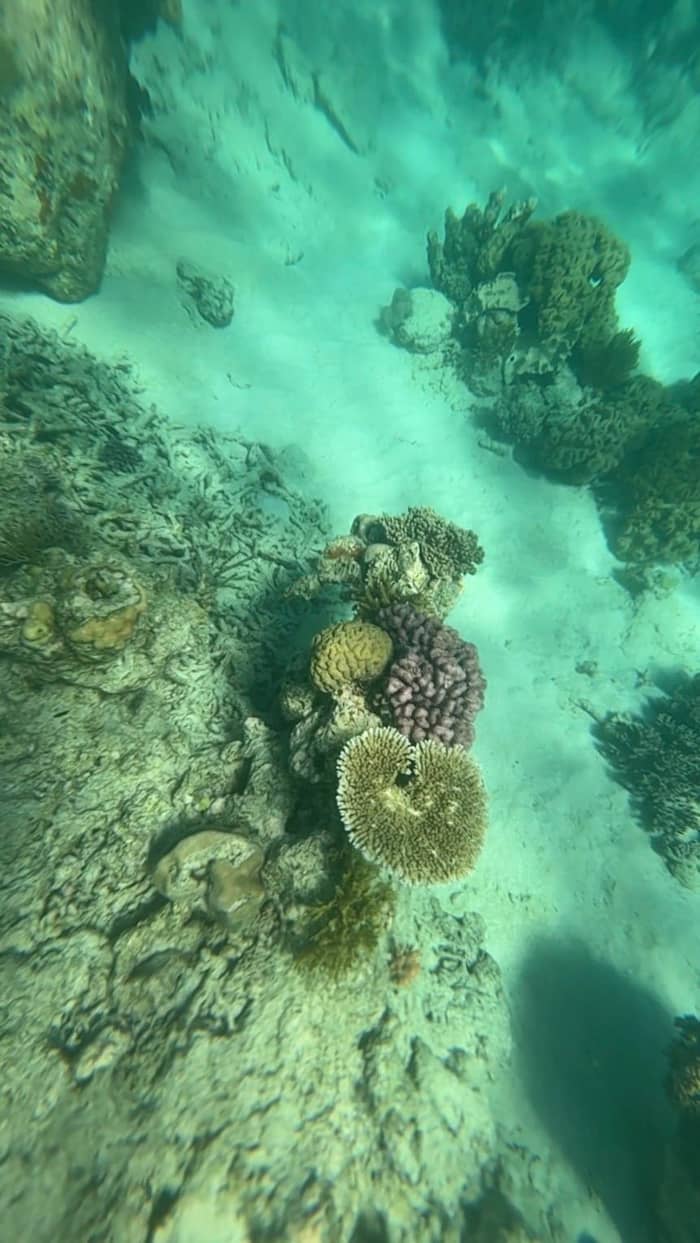
Counting species is one way to see the stakes. The World Heritage Area is listed for over 4000 species of molluscs and over 1500 species of fish.1 It is habitat for one of the most important dugong populations and for six of the seven marine turtle species, and Raine Island is the largest green turtle breeding area.2,13 These are not decorative facts. They are the populations that the reef exists to support.
Whales belong in the picture too. The reef is a vital breeding ground for about 30 species of whales and dolphins, and it is a breeding area for humpback whales.14,15 The Reef Authority says humpbacks make the trek from Antarctica to the reef's warmer waters between May and September.16 A reef that lost its coral would lose more than the coral, since so much else relies on the structure.
The less photographed habitats carry weight as well. The World Heritage Area includes about 39 species of mangroves, which is 54 per cent of the world's mangrove diversity.17 Coral reefs make up only about 7 per cent of the Marine Park, and the rest is a wide range of habitats from shallow seagrass to deep ocean.18 When people ask why the reef is important, the whole system is the answer and not only the coral.
The reef is Sea Country for First Australians. The Reef Authority says more than 70 Traditional Owner groups have connections to the marine environment that date back more than 60,000 years.3 That makes the reef a cultural landscape as well as a natural one, and the heritage listing records the strong ongoing links between Aboriginal and Torres Strait Islander peoples and their sea country.3
This matters for a visitor: the reef you see on a day trip sits inside a living culture. A reef trip is a visit to somebody's country, and it is fair to treat it that way: listen to what your crew says about the place, and take the same care you would in any home that is not your own, which starts with the way you behave around wildlife and coral.
It also shapes how the reef is protected. The Marine Park was created in 1975 and the reef was declared a World Heritage Area in 1981, and both frameworks sit alongside Traditional Owner connections that are far older.22,23 The legal protections are recent by comparison with the culture they protect, which is one more reason the reef is regarded as important beyond its ecology.
Which angle
Choose what you care about and see the fact behind it.
If I care about wildlife
Fish and turtles
The listing counts over 1500 fish species and six of seven turtle species.1,2
If I care about culture
Sea country
More than 70 Traditional Owner groups have links to the reef.3
If I care about work
Jobs
The reef supports 77,000 full-time jobs in the Deloitte study.4
If I care about tourism
The tourism income
Tourism generates $7.9 billion a year, nearly 90% of the value.5
If I care about my own visit
The reef charge
The charge from visitors goes directly to managing the park.6
Three kinds of value
Species
Life on the reef
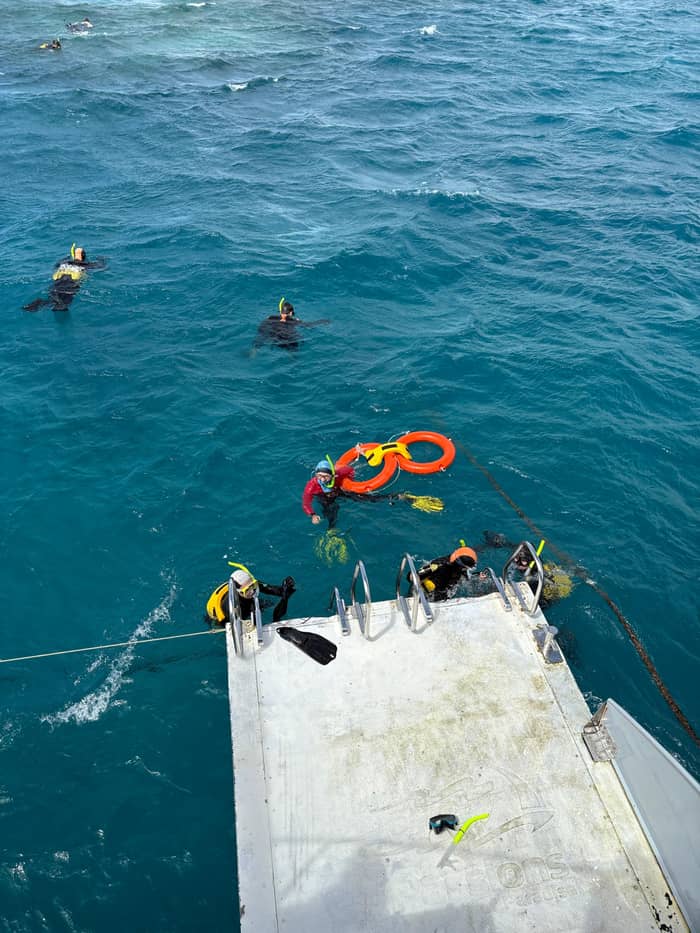
Culture
Sea country
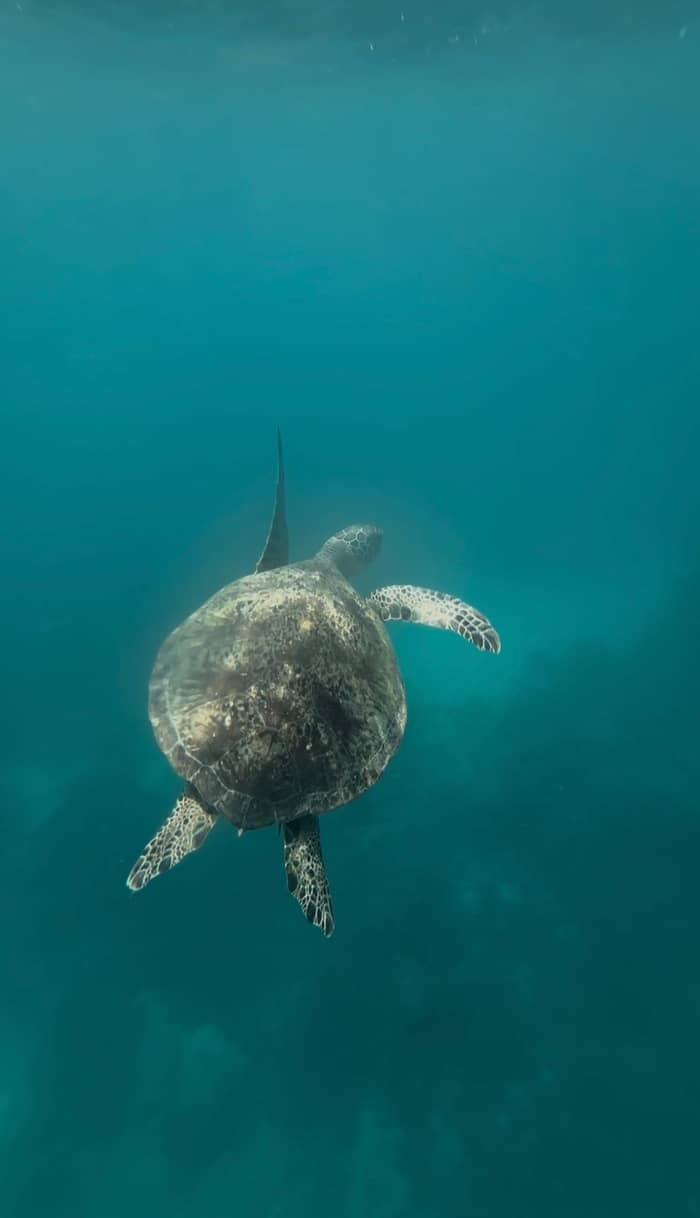
Income
Jobs and tourism
The economic figures come from a Deloitte study quoted by the Reef Authority. It values the reef at $95 billion across economic, social and cultural dimensions, and says it contributes $9 billion a year to the Australian economy.19,4 It also says the reef supports 77,000 full-time jobs, the equivalent of Australia's fifth-largest employer if it were a single company.4 The reef is, in the Reef Authority's words, an economic powerhouse.21
How much money does the Great Barrier Reef make from tourism? The Reef Authority's answer is $7.9 billion annually, which it says makes tourism the largest contributor and accounts for nearly 90% of the reef's economic value.5 It adds that more than 30 per cent of Queensland leisure tourism spending is linked to the reef.5
These are values from one study, and they are best read as a sense of scale and not a precise ledger. The useful point for a traveler is the direction: the reef earns its keep when it is healthy, and tourism is the activity that most depends on it staying so. The figures also explain why operators, governments and scientists share an interest in monitoring reef condition closely.
From ticket to reef
At booking
The operator holds a permit to run tourism in the Marine Park.10
On the day
A full day trip is one of three hours or more inside the Marine Park.11
Collected
The permit holder collects the charge from visitors.10
Each quarter
The charge is remitted to the Reef Authority on a quarterly basis.12
Spent
The funds are applied directly to management of the Marine Park.6
Visitor numbers depend on what you count. Tourism visitation to the entire Marine Park in 2023 was approximately 2.13 million total visitor days, where a visitor day is a visit by one tourist for one day.20,26 The Reef Authority's outlook report puts the 2022-23 total at 10.4 per cent below the 7-year pre-pandemic average of 2.45 million visits.27
Great Barrier Reef tourism is not spread evenly. Tourism is concentrated into about 7 per cent of the reef area, and the Cairns and Whitsunday planning areas account for more than 86 per cent of tourist visits.28,29 That concentration is good news for the rest of the reef, which sees little traffic, and it is a reason for the busiest sites to be managed with care.
A day from Cairns sits right inside that concentrated slice. The listing behind this site is a 9-hour premium catamaran day to 2 outer reef locations, from $193, rated 4.8 across 3,767 reviews. Free cancellation runs up to 24 hours before for a full refund, so you can decide on the weather forecast rather than months ahead.
Video
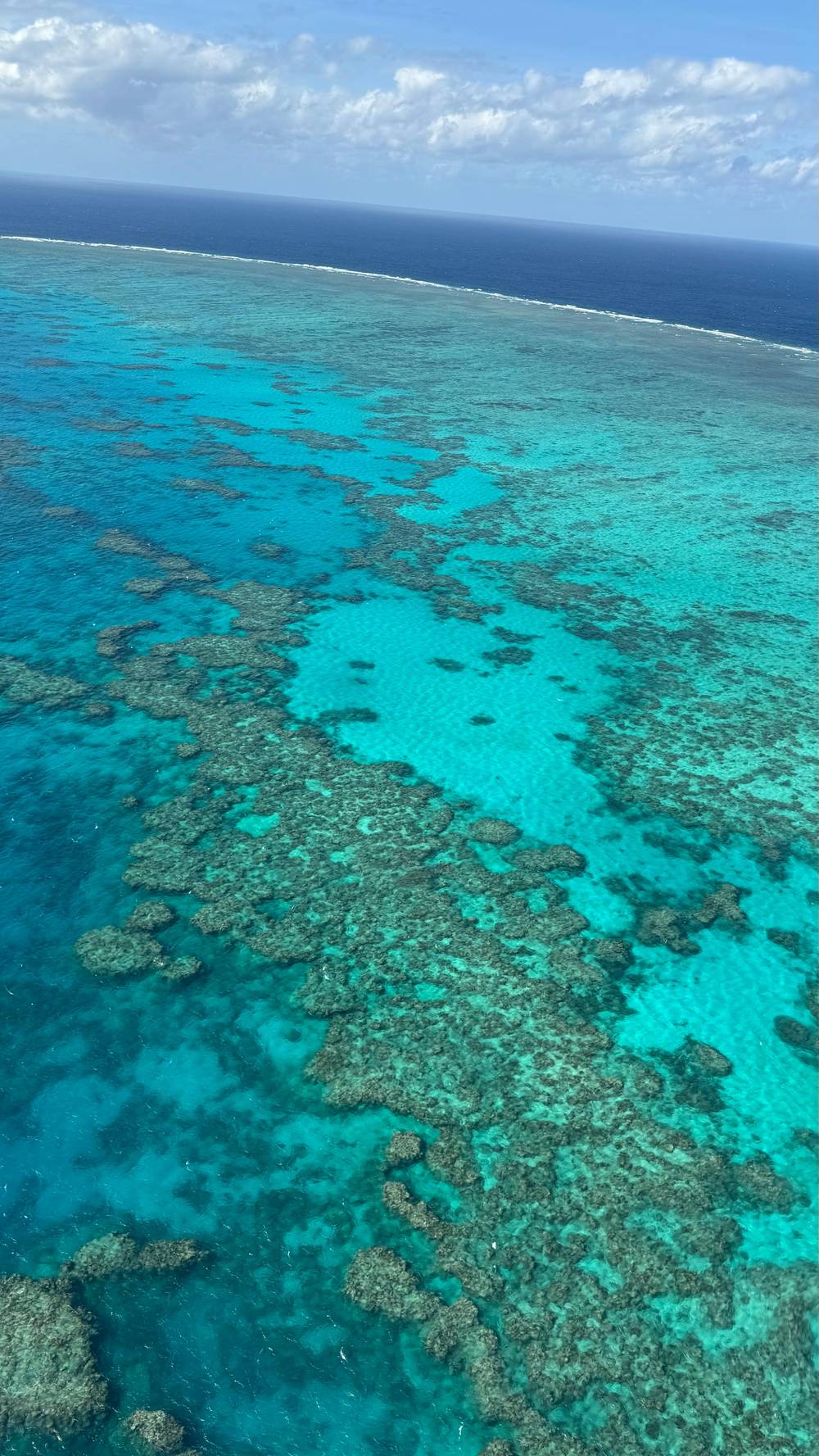
South China Morning Post on YouTube · The video waits until you tap play to load.
The Reef is also an economic powerhouse, contributing more than $9 billion each year to the Australian economy and providing around 77,000 full-time jobs.
Visit well
Part of a reef ticket is a charge that goes straight to the reef. Marine Park visitors in a tourist activity are liable to pay the environmental management charge to the permit holder, who remits it to the Reef Authority.10 For a full day passenger it is AU$8.50 per day, and for a part day passenger AU$4.25.30,31 From 1 April 2027 those rise to AU$9.00 and AU$4.50.24
The Reef Authority says all funds from this charge are applied directly to management of the Marine Park, and that they are vitally important to day-to-day management and long-term resilience.6,32 The permit holder collects the charge and remits it on a quarterly basis, so you pay it through the operator.12 A full day trip is one of three hours or more, counted from entering to leaving the Marine Park.11
Being a good guest is the free part. The Reef Authority's responsible reef practices ask boat users to be alert for whales at all times, particularly in the migration season from May to September.25 On the water, follow your crew's briefing on distances from wildlife, and let the crew pick the snorkel spot. Those small habits are how a visitor helps the reef rather than harms it.
FAQ
The Reef Authority says tourism is the largest contributor, nearly 90% of the reef's economic value.5
The Cairns and Whitsunday planning areas account for more than 86 per cent of tourist visits.29
A Deloitte study values it across economic, social and cultural dimensions.19
The Reef Authority says all funds from the environmental management charge are applied directly to management.6
The Reef Authority says their connections go back more than 60,000 years.3
Sources
Next read
Questions about the reef from Cairns? A real person answers here.