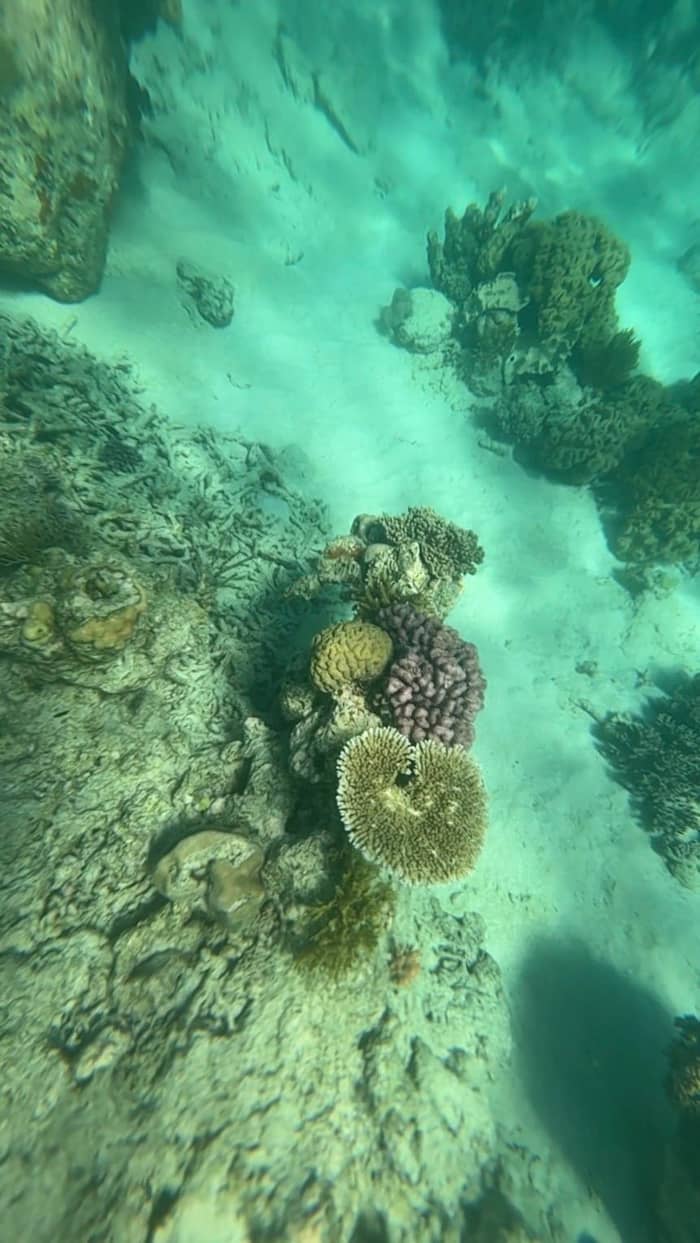
Ribbons and walls
Outer reef edge
Shelf edge
- OriginFringing reef
- WaterClearer, further out
- Drop beyondAbout 2000 m
Guides
Language
Currency
Check datesfrom $193 · cancelling is freeYour group, priced
Brief answer
The Great Barrier Reef formed as hard corals built limestone reefs on a coastal plain that flooded when sea level rose approximately 120 metres in the past 20,000 years.
The steps
Choose from 3 options
Choose the group size and see each day's from price.
≈
View≈
View≈
ViewStarting prices from GetYourGuide, converted at the ECB reference rate. You will see the exact price when booking.
Animals built the reef, a rising sea shaped where it grew, and the shelf edge decided where the outer ribbons sit. Here is the story in order, with the facts that back it.
Editorial team, greatbarrierreeftour.quest · Updated November 7, 2026 · 6 mins to read
In brief
Ask how the Great Barrier Reef formed and the answer has three parts. Living corals built the structure, a sea that was far lower than today flooded an old coastal plain, and the reefs that grew on that plain ended up where waves and currents gave corals the best conditions. Each part has an official explanation behind it, and the sections below take them in turn.
The Australian Institute of Marine Science states the rule that ties them together: corals and reefs grow best where there is most water movement.6 On a plain that was being drowned, the most energetic water was at the outer edge, and that is why the edge of the continental shelf tends to be outlined by a line of reefs.7 The inner reefs have a different origin, and a different story about hills.
None of this makes the reef a landform in the usual sense. A landform is carved or piled up by physical forces, whereas this structure is the accumulated work of animals, laid down on top of a landscape that was once dry. That is the helpful way to answer whether the reef is a landform: it sits on one, and it is mostly made of the animals themselves. The rest of the page shows how.
Types of reef
| Part | How it formed | Where it sits |
|---|---|---|
| Outer reefs | Fringing reefs on the shelf edge3 | Along the edge of the continental shelf3 |
| Ribbon reefs | Long outer reefs in the north8 | On the shelf edge with tidal gaps8 |
| Inner reefs | Tops of small hills with fringing reefs4 | On the flooded plain nearer the coast4 |
| Sand cays | Piled reef material, rare on outer reefs5 | Mostly away from high wave action5 |
| Continental islands | High islands counted in the park9 | Inshore9 |
| Mangrove islands | Low islands counted in the park9 | Inshore9 |
AIMS and the Reef Authority are the sources for each row, and the counts of islands and cays come from the Reef Authority.3,9
Everything starts with the coral. Despite looking like plants, corals are marine animals closely related to jellyfish.10 The reef holds around 450 species of hard corals, and these are the reef builders: they extract calcium from seawater to make limestone outer skeletons, and those skeletons form coral reefs.11,1 Ask what the Great Barrier Reef is made up of and the answer is largely limestone laid down by hard corals, together with the life that lives among them.
Corals live in partnership with microscopic algae called zooxanthellae, which sit in their tissues. A coral under stress expels those algae, which makes it transparent and exposes its white skeleton, and this is what the Reef Authority calls bleaching.12 The partnership is the engine of the whole structure, and a reef can only keep growing while enough of its corals stay alive.
Coral cover is the measure scientists use to judge how much of this engine is running. The Reef Authority calls it the percentage of the reef surface covered in live coral, and says reefs with high coral cover are more resilient to disturbances and provide a diverse habitat.13 It also says the reef remains a vibrant, resilient marine ecosystem, while climate change remains the greatest threat to it.14
The setting for the reef was a coastal plain that no longer exists above water. As the sea rose, that plain flooded. AIMS says sea level in the past 20,000 years has risen approximately 120 metres to its present level.2 The shelf that now lies beneath the reef was land you could have walked across, and its hills and river valleys shaped where corals found hard, shallow ground.
Water movement did the sorting. AIMS explains that corals and reefs grow best where there is most water movement.6 As the plain flooded, the most energetic region was its outer edge, and that is why the outside edge of the old plain, the continental shelf, tends to be outlined by a line of reefs.7 The sea kept rising, and the corals kept growing up toward the light.
The same record sits in the reef itself. The Reef Authority notes that environmental history is recorded in the reef structure, and that old massive coral cores show climate conditions over many hundreds of years.18 The formation story is not only a geological one told by diagrams. It can be read from the coral, which is an unusual thing to say about a place you can visit on a day trip.
Match the question
Pick the thing you wonder about and see the answer.
If Who built the reef
Hard corals
Hard corals extract calcium from seawater to make limestone skeletons.1
If Why a line of outer reefs
The shelf edge
The outside edge of the old plain was the most energetic zone.7
If Why inner reefs exist
Hills on the plain
Inner reefs are mostly the tops of small hills with fringing reefs.4
If Why few outer cays
High wave action
Sand cays usually do not form on outer reefs for that reason.5
If How clear the water is
Distance from shore
Outer reefs lie in clearer water than fringing reefs near islands.17
Three settings
Ribbons and walls
Shelf edge
Nearer the coast
Old hill tops
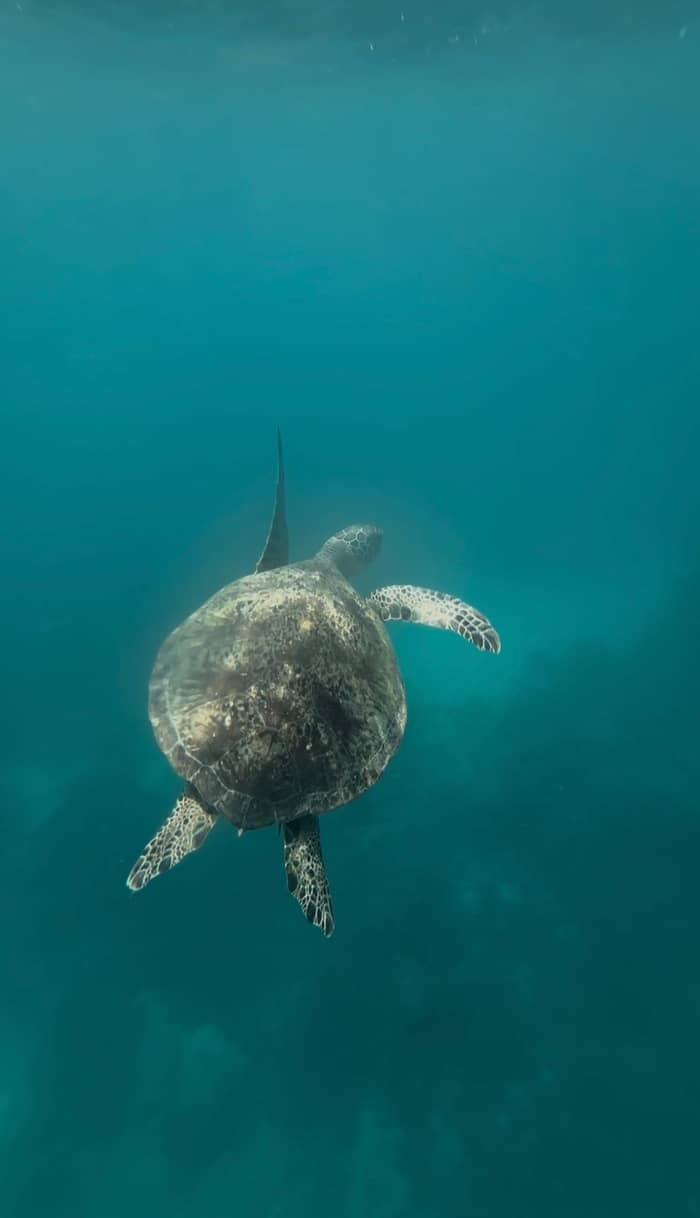
Sand and reef flat
Low island
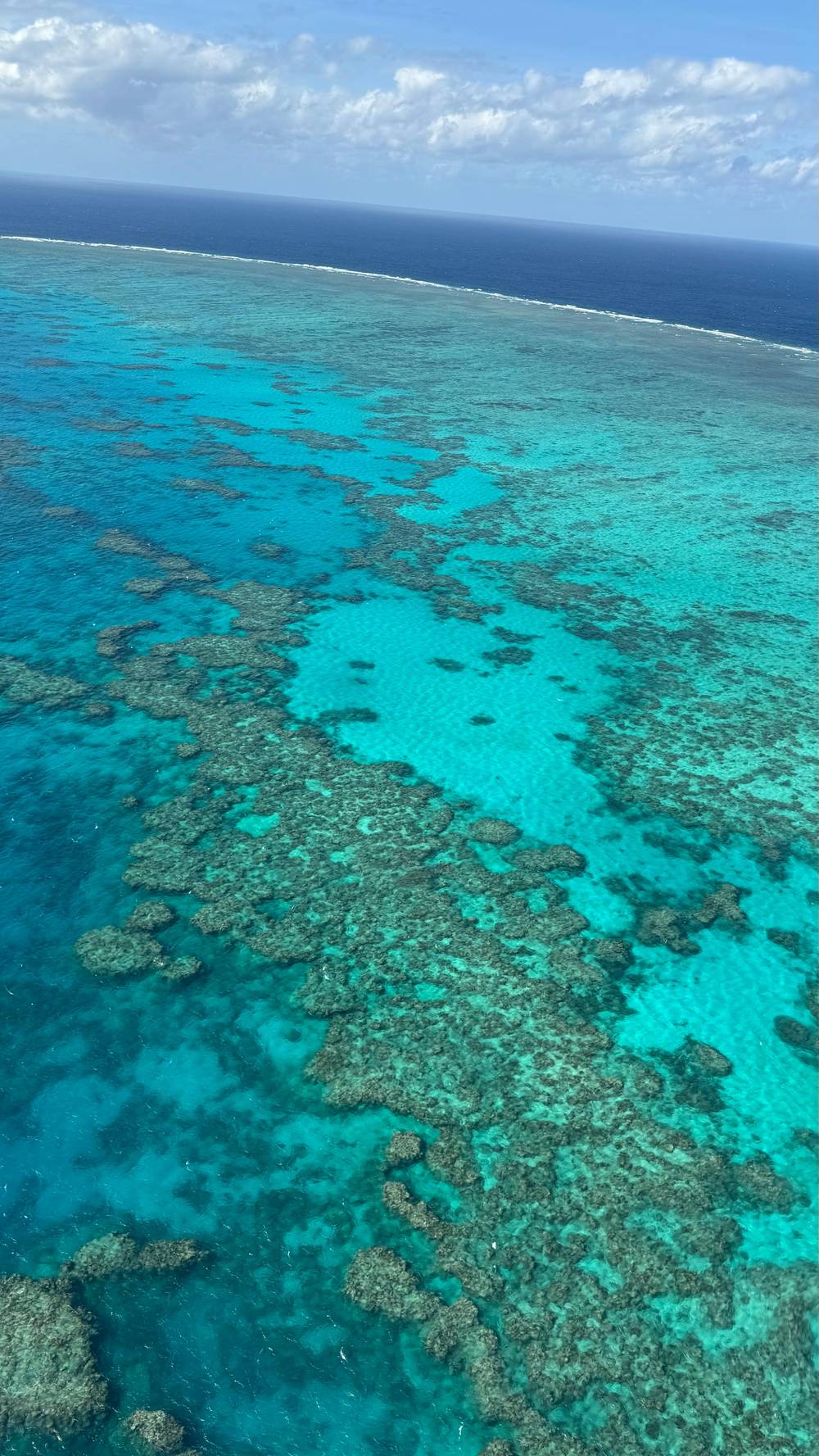
The outer reefs started as fringing reefs along the edge of the continental shelf.3 In the north, AIMS says they tended to form as ribbons along that edge.8 The front of such a reef drops sharply down the edge of the shelf, which falls to the floor of the Coral Sea, about 2000 metres below sea level.16
Why are there inner and outer reefs rather than one big outer reef? AIMS says the coastal plain was not flat. It included river valleys and small and large hills, and corals tended to grow best on hills, where waves broke and the water was most turbulent.4 The inner reefs are mostly the tops of these small hills that once had fringing reefs, and the growing coral eventually covered them completely as the sea rose.4
The outcome is a reef with distinct zones. Inshore waters average 35 metres deep, while the continental slopes on the outer reefs fall to more than 2,000 metres.15 The Reef Authority counts some 3,000 coral reefs in the Marine Park, and the shapes they take are different enough that a pilot or a snorkeler can tell where on the shelf they are.9
In order
A low sea
The sea once stood far lower, and a coastal plain lay where the shelf is now.2
Rising water
Over the past 20,000 years sea level has risen approximately 120 metres.2
At the edge
Outer reefs started as fringing reefs along the continental shelf edge.3
On the hills
Corals grew best on hills, and inner reefs are mostly the tops of small hills.4
In the north
Outer reefs in the north tended to form as ribbons along the shelf edge.8
Today
The Marine Park holds some 3,000 coral reefs and 300 coral cays.9
Not every piece of the reef is under water. The Marine Park includes 600 continental islands, 300 coral cays and about 150 inshore mangrove islands.9 Cays are made from reef material piled into low islands, and AIMS says sand cays usually do not form on the outer reefs because of high wave action, though there are exceptions.5 On an outer reef day that usually means a boat and a mooring rather than a beach.
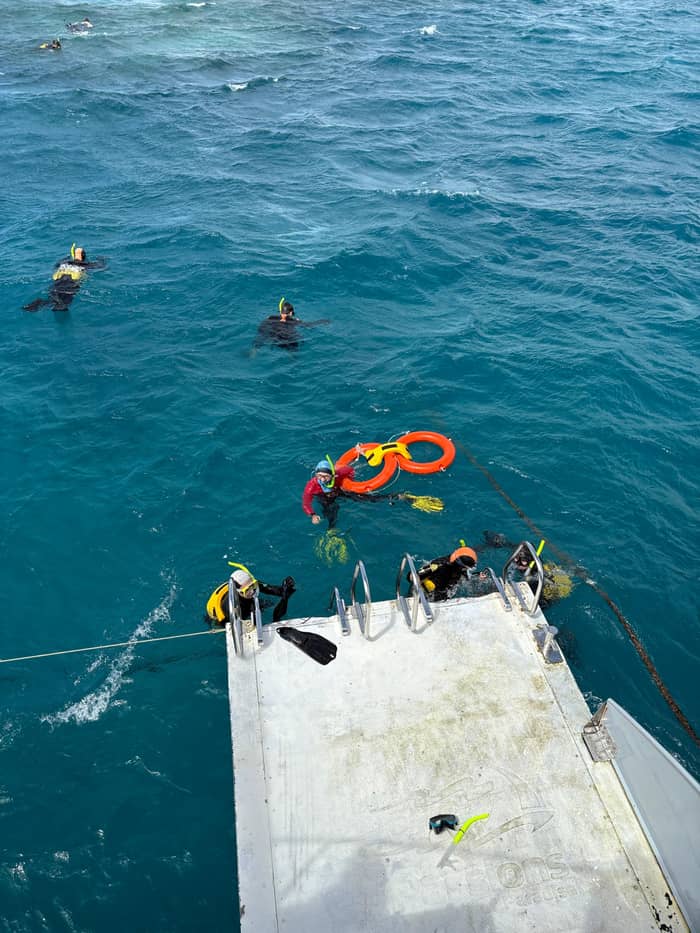
Pontoons and moorings are how visitors reach the outer sites. Tourism Whitsundays says outer reef sites lie in deeper waters beyond the islands and are accessed by pontoons or moorings.21 One Cairns operator says its pontoon uses the same moorings as the old pontoon, so there was no damage done to the reef.19 A pontoon is a floating platform tied to the reef, not a structure built into it.
Our own listing visits outer reef locations by catamaran. The crew chooses 2 locations on the day between the Flynn and Milln reefs and the more northern Norman and Hastings reefs, in a trip of about 9 hours. The first stop gets 2 hours for snorkeling or diving, and the second gets 1.5 hours. Which reef that is on your date depends on the day, and that is normal for outer reef cruises.
Video
Nat Geo Animals on YouTube · The video waits until you tap play to load.
As we have seen, corals and reefs grow best where there is most water movement.
On the boat
Clear water is one reason people choose the outer reef, and the formation story explains part of it. Tourism Whitsundays describes inner, fringing reefs as sitting close to the islands, with slightly murkier water, while outer reefs lie further offshore in clearer water with larger coral gardens and generally better visibility.17 The distance from shore is the difference.
One Cairns operator spells out the same idea for its Moore Reef pontoon. It says the site, approximately 45 km offshore from Cairns, is far enough from coastal rivers, streams and sandy beaches to ensure clear ocean waters in a range of weather conditions.20 A second operator gives its pontoon at the same reef as about 47 km offshore, so the figures differ slightly by who is measuring.22
Weather on the coast does not always match the reef. Sunlover says a grey morning in Cairns regularly turns into a bright day on the reef.23 That fits the clear-water idea, since the outer sites sit well out from the coast.20 If you are picking between a coastal island trip and an outer reef day, this is the distinction to carry with you into the booking.
FAQ
Hard corals extract calcium from seawater to make limestone outer skeletons that form coral reefs.1
AIMS says corals grew best on hills where waves broke, and the inner reefs are mostly the tops of small hills.4
AIMS says outer reefs in the north tended to form as ribbons along the edge of the continental shelf.8
AIMS says the edge of the continental shelf drops to the floor of the Coral Sea, about 2000 metres below sea level.16
AIMS says sand cays usually do not form on the outer reefs because of high wave action, with some exceptions.5
Tourism Whitsundays says outer reefs lie in clearer water with generally better visibility than fringing reefs.17
Sources
Next read
Questions about the reef from Cairns? A real person answers here.